


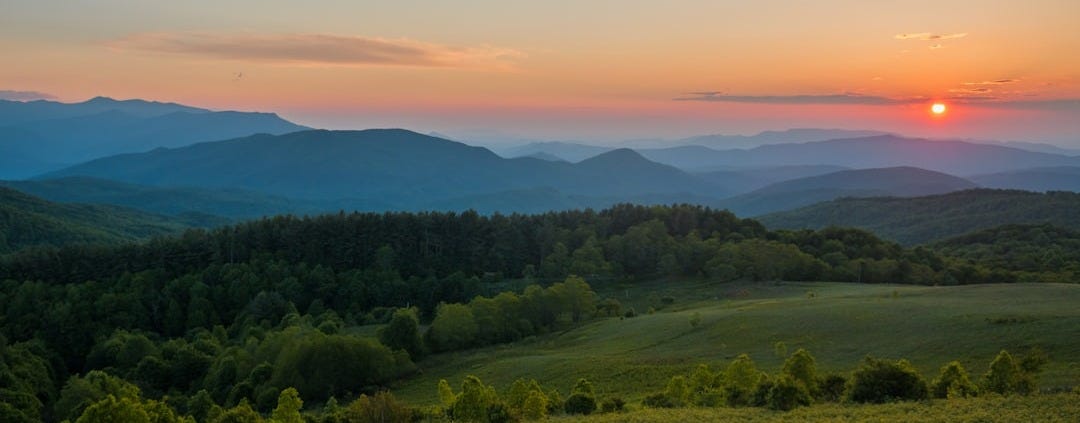
I grew up in rural parts of central Pennsylvania, and for much of my teenage life, I believed there was not much worse of a fate. I dreamed of living in a big city, or abroad, or somewhere—anywhere—else. After college, I moved away and tried to forget about my small-town life. But, of course, I never could.
I remember renting an apartment on Poet’s Row in Denver, feeling as though I had finally made it. I was living in a city. I was surrounded by writers. I was far from the small towns of central Pennsylvania. But guess what? When I sat down to write, all I could write about was rural Pennsylvania.
It took me many years—and many moves—to understand that I would always carry that place with me, it is integral to who I am.
For all of the struggles those places had given me, they had also given me much more: a particular way of seeing the world, a particular vocabulary, a particular relationship to landscape, community, work, class, and home. No matter where I go, those places remain part of who I am.
I think this is true for our characters, too.
Place is more than setting. It shapes who we are, what we value, what we fear, what we notice, and what we believe is possible.
When we write place, we’re not just describing what our characters see around them. We’re exploring the relationship between a person and the world that surrounds them.
Here are three things to consider when writing place.
1. Place shapes how we see the world.
Place influences our worldviews, our interests, and even our tastes.
When we’re writing about place, we don’t have to rely only on descriptions of mountains, buildings, weather, or streets to establish where we are. The dialogue our characters use, the food they eat—or refuse to eat—the activities they engage in, the clothes they wear, and the assumptions they make about other people can all create a sense of place.
Often, these subtler elements are what give a setting its depth.
Consider Ursula K. Le Guin’s “The Ones Who Walk Away from Omelas.” The story’s central tension comes from the contrast between the beautiful, joyful city of Omelas and the child hidden away in a room, suffering so that everyone else can prosper.
The physical setting matters, but what matters more is what the people of Omelas believe about their place—and what they’re willing to accept in order to remain part of it.
Place tells us not only where people live, but how they understand the world they live in.
2. Place creates both belonging and conflict.
The places we live can make us feel at home. They can also make us feel trapped. They can offer community, identity, and connection while simultaneously revealing limitations we desperately want to escape.
A character cannot exist in a world without responding to that world in some way. And that response can become a powerful source of tension and conflict.
In S.A. Cosby’s Blacktop Wasteland, Beauregard’s economic circumstances—and the pressures of keeping his small-town auto shop afloat—help pull him back toward a life of crime he has tried to leave behind.
In Julia Phillips’s Bear, two sisters living on a remote island are forced to reckon with what happens when a bear appears on the island while they are caring for their dying mother.
In both stories, place isn’t simply where the story happens. Place creates the circumstances that make the story possible.
3. Place is more than landscape.
When we hear “sense of place,” we often think about landscape: mountains, rivers, forests, weather, fields. But place also includes architecture, food, language, history, industry, religion, immigration, economics, and the structures—both visible and invisible—that shape a community.
Think about the homes in Silvia Moreno-Garcia’s Mexican Gothic, or the architecture and institutional history in Rebecca Makkai’s I Have Some Questions for You. The buildings aren’t just a backdrop. They carry history. They shape the characters’ experiences. They create atmosphere, expectations, and sometimes danger.
A place has a history before our characters arrive.
And our characters enter that history whether they understand it or not.
How long do we have to live somewhere for it to become part of us?
I don’t think there’s a simple answer. You can spend a lifetime in the same house and never feel that it belongs to you. You can spend a week abroad in college and return home with your entire perspective altered. You can leave a place for twenty years and still find that it lives inside you.
Maybe that’s because place isn’t something outside of us.
It becomes memory. It becomes language. It becomes instinct. It becomes the stories we tell about where we came from—and the stories we tell ourselves about where we’re going.
I spent years believing I needed to get away from rural Pennsylvania in order to become the person I wanted to be. Instead, I realized that I needed to leave in order to see what that place had given me.
And maybe that’s something worth remembering when we write our characters, too.
We don’t just write the places our characters inhabit. We write the places that inhabit them.
This is terrific, Aurora! I appreciate these nuanced ways to think about place, to go deeper than the obvious. Thanks!